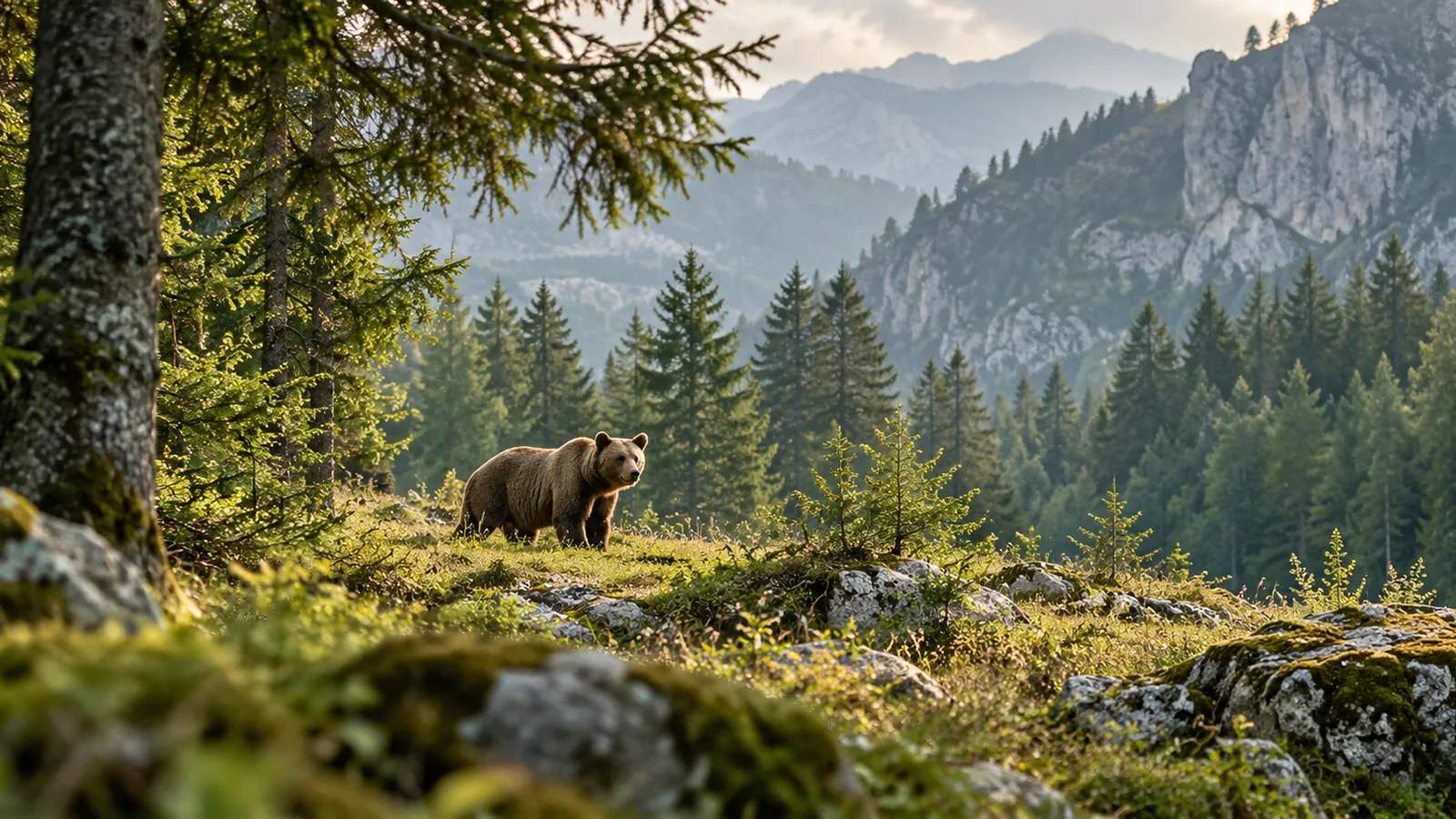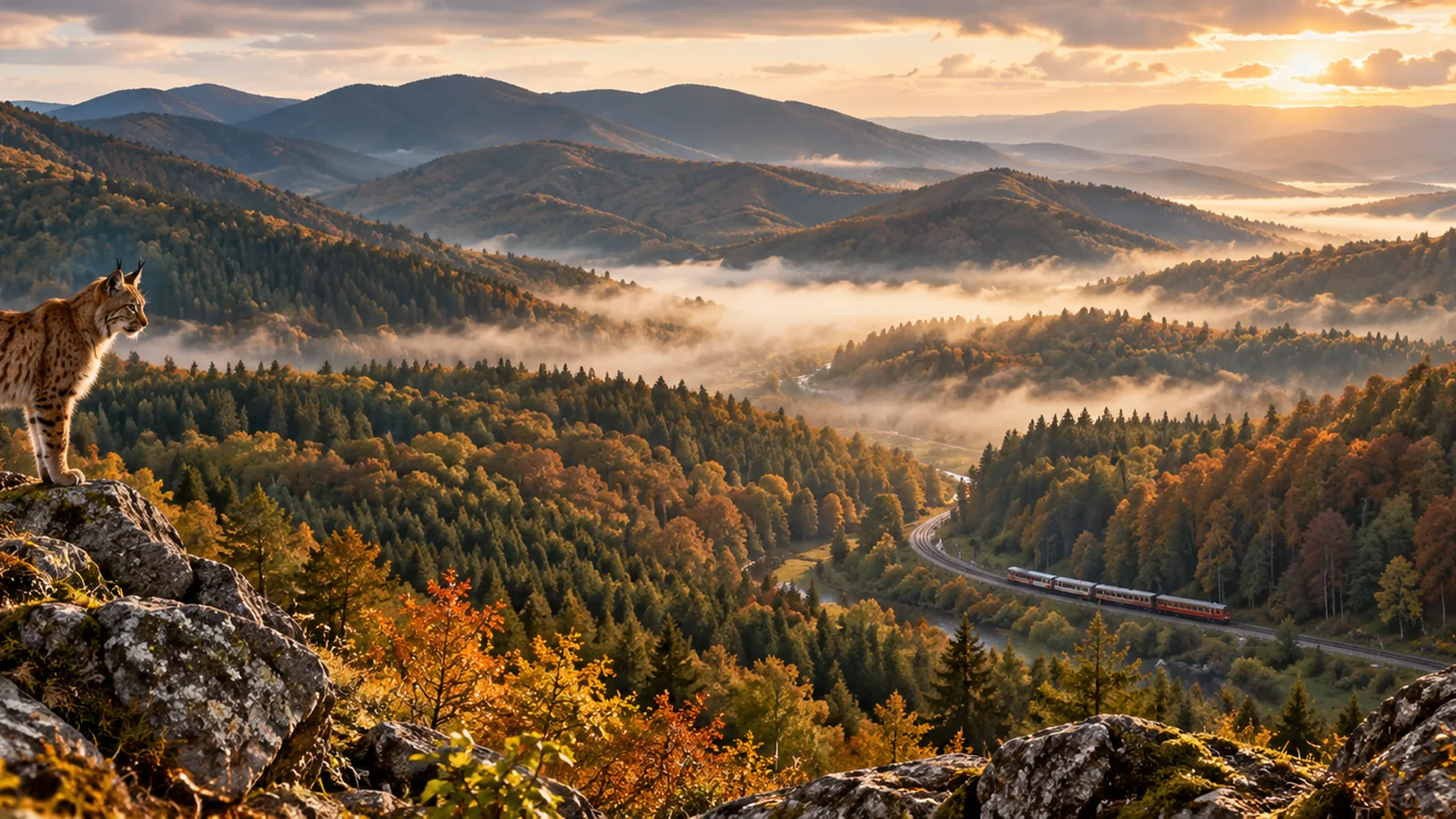
Poloniny National Park lies in northeastern Slovakia, close to Poland and Ukraine. Its forested hills suit travelers interested in woodland ecology, quiet walking and the relationship between rural communities and protected landscapes. Plan around permitted trails and current park advice; this is a place for patient observation, not a guaranteed wolf-watching itinerary.
Understand where you are going
Poloniny belongs to the eastern Carpathian landscape. National borders divide a region whose forests and wildlife extend beyond a single country's map. That wider setting matters ecologically, but it does not mean visitors can cross borders freely along any woodland path. Follow official access information and the rules for your nationality and planned route.
The park's appeal is not a sequence of roadside spectacles. Time in the forest reveals changing light, old trees, fungi and the structure of woodland. A slower itinerary gives these details room. Someone seeking a packed list of attractions may enjoy the visit more by adjusting expectations before arrival.
Make the official park authority your starting point
Use the park administration's website for current notices, visitor guidance and contact information. Access rules, conservation zoning and trail conditions can change. An old walking description is useful for inspiration but cannot establish whether a route is open today.
Before booking accommodation, identify the actual starting point of the activities you want to do. A property described as near the park may still be awkward without a vehicle. Ask for the distance to a permitted trail, the available transport, and whether the host can arrange a lawful transfer or a knowledgeable local guide.
A forest visit that rewards attention
A guided woodland walk can help explain features that are easy to overlook: standing deadwood, decaying trunks, different canopy layers and the small habitats created by fallen branches. Stay on the permitted route even if an appealing photograph seems just beyond it. Sensitive areas do not become accessible because the ground looks undisturbed.
Bring binoculars for details as well as animals. They can reveal a woodpecker's movement high in the canopy without encouraging a closer approach. A compact field notebook is useful for recording questions to ask later. Avoid collecting fungi, plants or other natural objects unless park rules explicitly permit the activity.
Wildlife: value signs without chasing sightings
Large mammals are one reason people become interested in the Carpathians. Their presence is not a timetable. A guide may explain tracks, feeding signs or habitat use without seeing the animal itself. Do not follow fresh signs into dense cover or approach a resting place for a photograph.
Choose interpretation over pursuit. Ask how a guide avoids disturbing wildlife, whether the outing stays within visitor rules, and what happens if a sensitive situation develops. Reject promises that depend on luring animals or entering restricted ground. Our wolf conservation explainer explains why a landscape can support wolves while sightings remain uncommon.
Choose a season with realistic trade-offs
Spring can bring changing ground conditions and sensitive breeding periods. Summer offers longer days but does not remove the need for weather protection or an early return plan. Autumn changes the woodland's light and color, while short days can limit a walking itinerary. Winter requires a different level of preparation and current local advice.
These are planning considerations, not a forecast or a promise about trail conditions. Check weather close to departure and ask the park or a competent guide about the particular route. If the advice is to shorten a walk, use the spare time for village exploration or indoor interpretation rather than searching for an unofficial alternative.
Reach the region without rushing the final leg
Start by finding rail connections to a practical regional gateway, then examine onward buses and transfers separately. Do not assume an intercity arrival connects with a rural service on the same evening. Weekend and holiday schedules deserve their own check.
If a transfer is necessary, arrange the pickup location, contact method and luggage capacity before departure. Keep a buffer for delayed trains. A first night near your arrival point can be a better choice than paying for a long late transfer after a tiring journey. See our rail-based adventure guide for a planning sequence.
Stay locally and travel considerately
A small guesthouse can provide useful knowledge about food availability, local transport and appropriate guides. Ask before arrival whether dinner needs advance notice and how payment works. Avoid assuming that every village has late shopping or that a host can resolve an unplanned itinerary at short notice.
Respect residential space, gates and agricultural activity. Seek permission before photographing people or entering private land. Buying local services is one way to support the area, but courteous behavior matters just as much. The landscape is also someone's home, workplace and cultural inheritance.
Pack for the walk you can actually complete
Carry weather layers, water, food, a charged phone and an offline route reference appropriate to your outing. Wear footwear suited to wet or uneven ground. Tell someone your plan and return time if walking independently on a permitted route. Do not depend on continuous mobile coverage.
For limited mobility, ask specific questions about surfaces, gradients, parking or drop-off points, and accessible facilities. A route labeled easy may still include steps or rough ground. Written confirmation from the relevant provider is more useful than a general destination description.
Before you go
Is Poloniny a place for independent walking?
Some visits can be planned independently, subject to current rules and conditions. Guided interpretation can add value and may be needed for particular activities. Confirm the route rather than assuming universal access.
Are wolf sightings guaranteed?
No. Plan for forest ecology and landscape interpretation, with wildlife encounters as an uncertain possibility.
Can I use this guide as a trail map?
No. Obtain current official route information and an appropriate map. This article is orientation, not navigation.
Give the forest enough time
A few unhurried days allow space for weather, local conversations and repeated walks. Poloniny is more rewarding as a place to understand than as a list to finish.
Source notebook
References & further reading
- Poloniny National Park administration
- Slovakia Travel: National Park of Poloniny
- Slovak nature conservation: East Carpathians
Sources checked 31 October 2026. These references support the geographic and ecological context. Planning recommendations are editorial advice; confirm current access, services and activity arrangements directly.