Bulgaria's Rhodope Mountains offer a rich setting for understanding conservation through landscapes rather than isolated wildlife sightings. Rocky valleys, woodland and open ground connect the stories of vultures, grazing animals and rural communities. Begin with a clearly located base and a knowledgeable guide; the region is too varied to treat as one interchangeable mountain destination.
Choose your part of the Rhodopes
The name covers a broad mountain region, so research the specific place before booking transport. An activity focused on the eastern Rhodopes may involve a different landscape and transfer plan from a walking holiday farther west. Ask for the meeting location, realistic journey time and the nature of the ground.
Avoid creating a route from scattered wildlife photographs. A bird image may have been made in a controlled hide, at a special season or over several visits. Choose a trip that explains habitat and conservation even if the best-known species remains distant or unseen.
Vultures make food webs visible
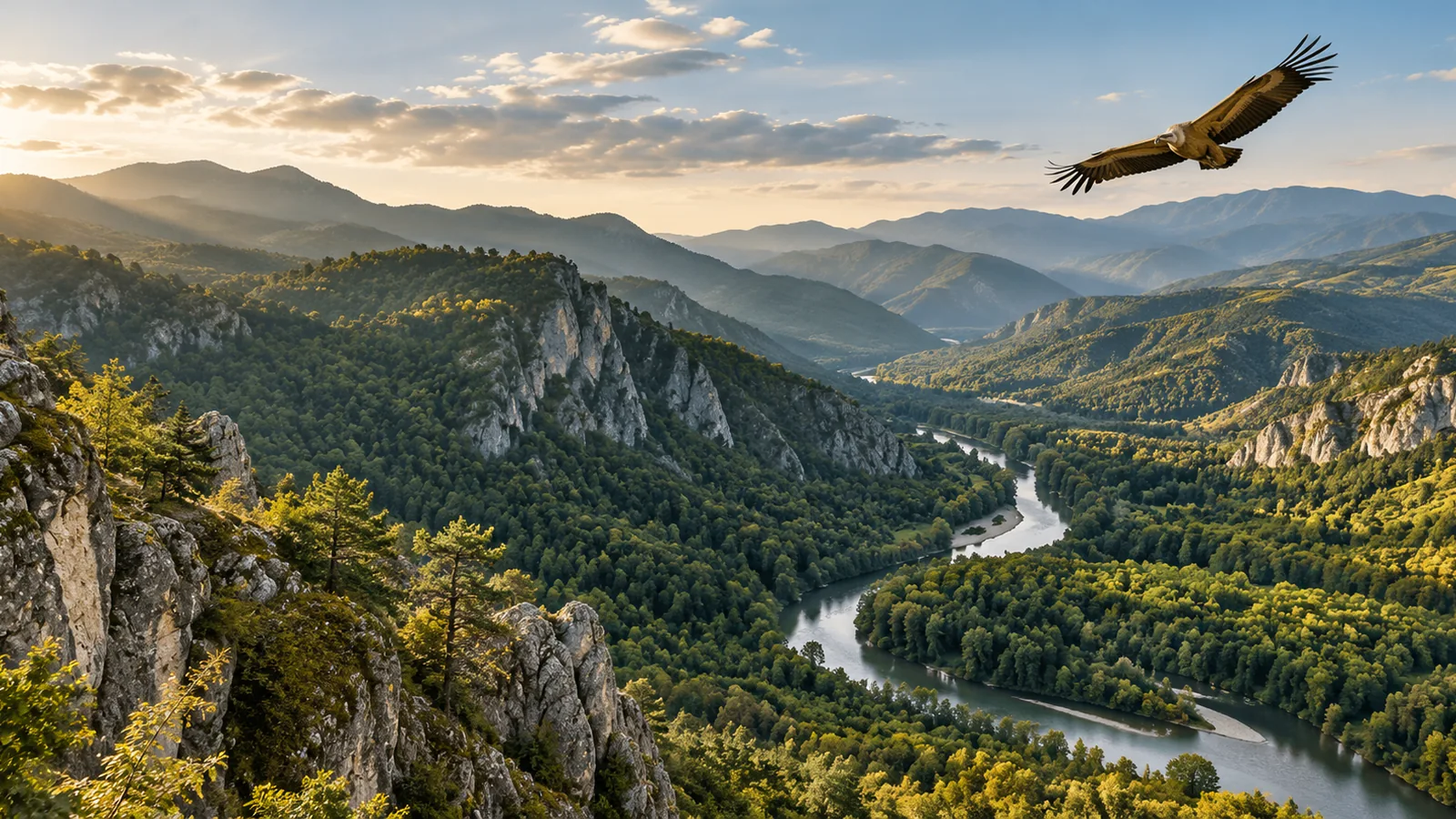
Watching a vulture circle on rising air can prompt questions about what happens on the ground. Scavengers depend on food availability and safe landscapes, while threats can extend far beyond a visitor's viewpoint. Rewilding Europe's Rhodope programme describes work involving vultures, herbivores and the recovery of ecological relationships.
Keep the interpretation wider than a species list. Ask how grazing, land management and animal mortality relate to the food web, and how conservation teams approach threats. Do not visit carcasses or feeding locations independently. Such places can have welfare, biosecurity and access considerations that are not obvious to a visitor.
Observe birds without entering their space
Use binoculars and, where useful, a guide's telescope from a permitted viewpoint. Distant observation can be more revealing than moving closer: flight patterns, habitat and relationships with the terrain remain visible. Never approach nest cliffs or use drones to obtain a dramatic view.
Ask about seasonal sensitivity before choosing a route. A viewpoint suitable at one time may be inappropriate during breeding. Avoid publishing precise locations of nests or other vulnerable sites. A general description of the valley can tell a satisfying story without directing the next visitor toward a sensitive ledge.
Grazing and woodland belong in the same story
A varied landscape can contain woodland, scrub, grassland and rocky ground. Open habitat is not automatically degraded forest, and tree cover is not the only measure of ecological value. The role of grazing depends on the place, the animals and the management context.
A local guide can help explain what is known and what remains a project objective. Distinguish an animal release from proof that an ecological process is fully restored. Read claims about rewilding as propositions to understand, not slogans to repeat. Our European rewilding guide offers questions for evaluating them.
Rural communities are part of the landscape
Villages, farms and local businesses shape how visitors experience the region. Choose accommodation that fits the actual itinerary and ask about meals, transport and payment in advance. A small host may need notice to prepare dinner or arrange an early breakfast.
Treat time spent locally as part of the trip. Buying meals, paying a guide and staying several nights can spread spending more meaningfully than a hurried photo stop. It still does not prove a net environmental benefit. Ask about any claimed conservation contribution separately and look for a specific, checkable explanation.
Build transport around the last mile
Research rail and coach options to a practical gateway, then check the onward connection. A town on a national route may still be some distance from a birdwatching site. Confirm rural bus schedules directly and ask whether a shared transfer is available.
If your itinerary includes a border crossing or an overnight connection, verify current requirements and the exact service date. Allow a buffer before a booked guiding day. Our flight-free planning article explains why the final transfer should be planned before the international train.
Prepare for time outdoors
Choose clothing and water supplies for the forecast and the duration, including periods of standing still. Birdwatching can involve long waits with less movement than hiking. Ask the guide about shade, toilet access, terrain and the distance from a vehicle or meeting point.
For walking, use current route information and stay within your experience. Heat, exposed ground and sudden weather changes can alter a day's difficulty. Have an alternative that does not depend on entering restricted habitat or driving an unsuitable road. A village visit or an interpretation session can be a useful part of a nature holiday.
Photograph the wider setting
A landscape image can explain the relationship between cliffs, open ground and forest without disturbing wildlife. For animal photographs, follow the guide's rules and avoid altering behavior for a cleaner frame. Never move an animal, remove vegetation or leave food to improve a shot.
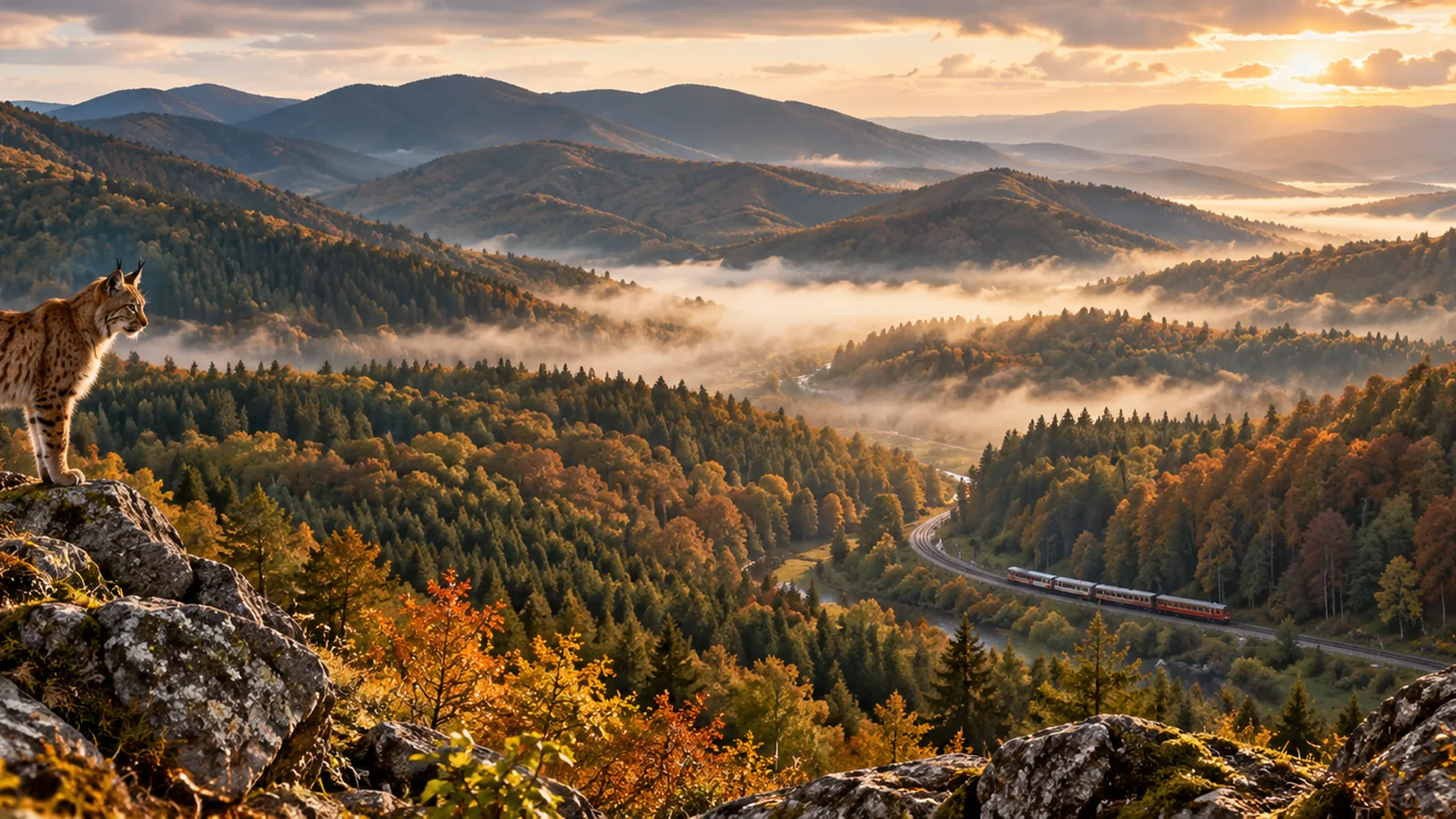
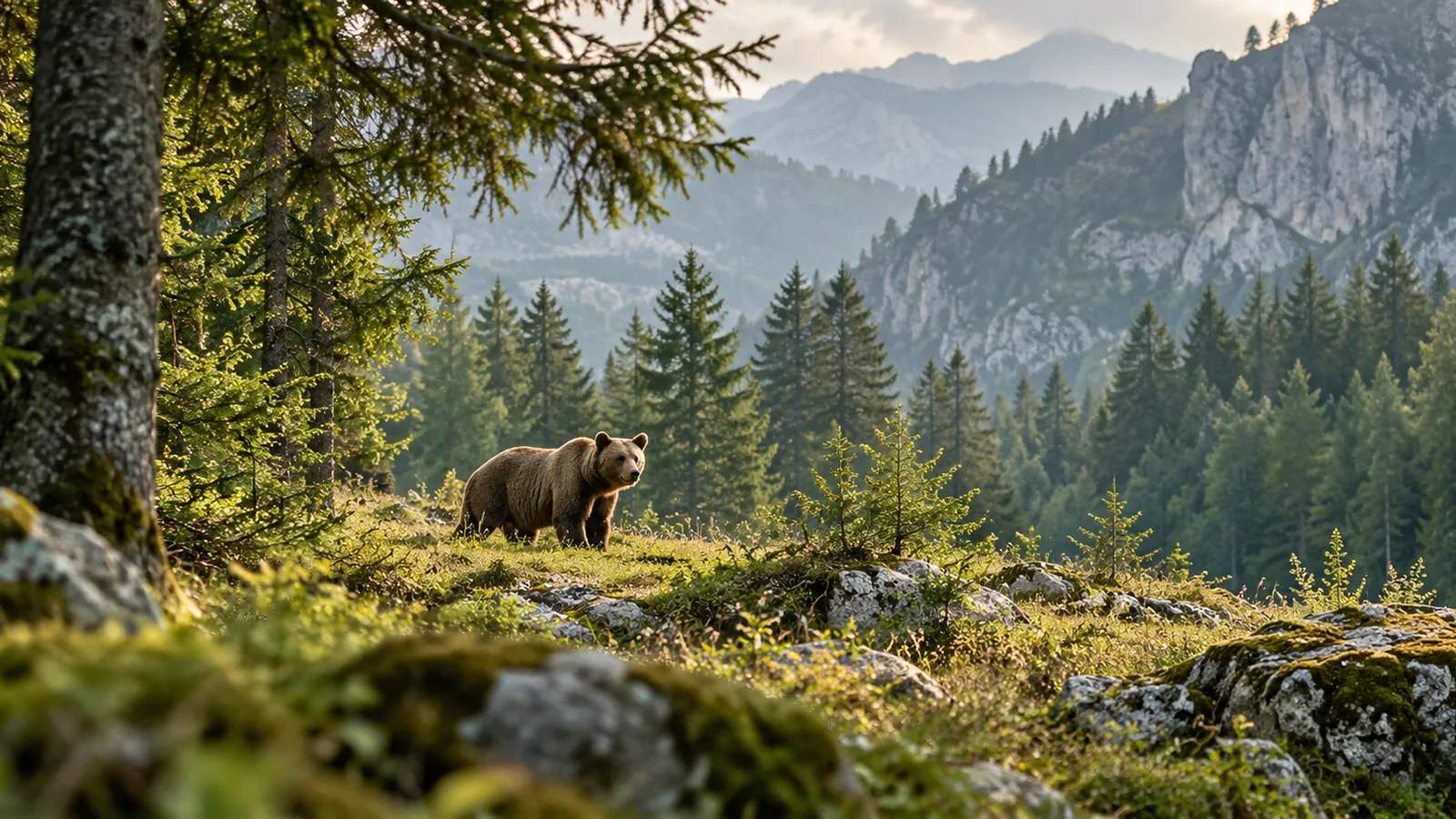
Ask before photographing residents or private property. Share images with honest captions: where the scene was made, whether it was a managed observation setting and what was actually observed. Our own generated illustrations are labeled as such and should not be mistaken for field reporting.
What to confirm before booking
Ask about the guide's experience, group size, transport, cancellations and the activities that remain possible in poor conditions. Request clarity on what the price includes rather than assuming entrance fees or transfers are covered. No provider should guarantee a wild encounter simply because a species occurs in the region.
Compare the itinerary with your interests. A photography hide, a walking day and a general natural history tour can be very different experiences. Choose the one whose daily rhythm you would enjoy, even without the headline animal.
Questions about a Rhodope visit
Is Bulgaria only a hiking destination?
No. Birdwatching, landscape interpretation and rural stays can shape a trip with modest walking, depending on the provider and location.
Are all rewilding areas open to visitors?
No. Access depends on land ownership, activity and local rules. Confirm permission through the relevant authority or operator.
Can I combine several mountain regions in a short trip?
You can investigate the possibility, but longer transfers may reduce useful time outdoors. One well-chosen base is often more rewarding.
Follow the connections
The Rhodopes invite a way of seeing that links a circling bird to the valley below it. Give the region enough time for those relationships to become visible, with local knowledge guiding the visit.
Source notebook
References & further reading
Sources checked 31 October 2026. These references support the geographic and ecological context. Planning recommendations are editorial advice; confirm current access, services and activity arrangements directly.